
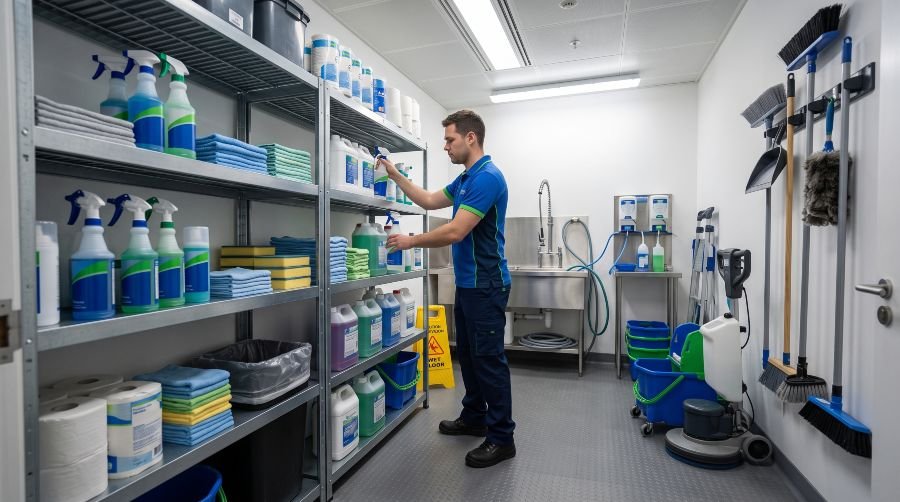
Most people never think about the small room at the end of the hallway with a mop sink and a few shelves. Yet that space quietly decides how well the rest of the building is cleaned. When it is organized, crews work faster, supplies never run out and chemicals are stored safely. When it is a mess, mops sit in dirty water, toilet paper runs out on a Tuesday afternoon and nobody can find the right product.
A well-planned janitor closet is one of the cheapest upgrades a facility can make. Here is how to set one up so it supports your cleaning team instead of slowing it down.
Choose the right location and size
The best location is central, close to the areas that need the most attention, such as restrooms and break rooms. In multi-floor buildings, one closet per floor saves a lot of time otherwise spent hauling carts up and down in the elevator.
The room does not need to be large, but it should fit a cleaning cart, a vacuum, a mop bucket and shelving without anyone having to move things around to reach them. If your building is still being designed or renovated, plan for good lighting, a floor drain and enough space for the door to open fully.
Build in the essentials
A mop sink and water access
A floor-level mop sink, sometimes called a service sink, makes filling and emptying buckets safe and easy. Without one, crews end up dumping dirty water into restroom sinks, which is unhygienic and hard on plumbing. Hot and cold water and a hose connection make dilution and cleaning tasks much simpler.
Ventilation and lighting
Wet mops, damp microfiber and chemical containers need airflow. A small exhaust fan or a vented door helps prevent musty odors and mildew. Bright lighting matters too, because people need to read labels and dilution instructions clearly.
Shelving and wall storage
Sturdy, easy-to-clean shelving keeps products off the floor, where they can get wet or knocked over. Wall-mounted holders for mops and brooms keep the heads off the ground so they dry properly between uses. Hooks for dustpans, signs and caddies free up floor space for the cart.
A lock on the door
Cleaning chemicals should never be accessible to visitors, customers or children. A locking door protects people and inventory at the same time.
Store cleaning chemicals safely
Chemical storage is the most important part of any janitor closet. Keep every product in its original, labeled container, and if you dilute into spray bottles, label those bottles too. Store heavy containers and corrosive products on lower shelves so nothing dangerous has to be lifted overhead.
Keep incompatible products apart. Bleach should never sit next to ammonia-based glass cleaners or acidic toilet bowl cleaners, because accidental mixing can release toxic gases. Separate shelves or bins for each product family reduce that risk.
Every hazardous product needs a Safety Data Sheet available to the people who use it, either in a binder inside the closet or through a digital system everyone can access during their shift. Keep gloves and eye protection right where products are handled. Where corrosive chemicals could splash into someone’s eyes, workplace safety rules require suitable facilities for flushing the eyes nearby.
Organize by zones
A simple zone system makes the closet intuitive for anyone who walks in. One area holds chemicals, grouped by use: restroom, glass, floors and general surfaces. Another holds paper goods and consumables such as toilet paper, paper towels, soap refills, seat covers and trash liners. A third holds tools and equipment, including microfiber cloths, mop heads, vacuums and caddies.
Label the shelves, not just the products. When every item has a home, it is easy to see at a glance what is missing. If your team uses color-coded microfiber, for example red for restrooms and blue for general surfaces, store each color in its own bin so cloths are never mixed between areas.
Set inventory levels and restock on schedule
Running out of supplies is one of the most common complaints office managers hear. The fix is a par level system. For every item, decide the minimum quantity that should be in the closet at all times and the amount to reorder when stock reaches that point.
Base those numbers on real use. A 40-person office with two restrooms goes through toilet paper and paper towels at a very different rate than a small retail store. Check stock on a fixed day each week, and adjust levels after busy periods, events or seasonal changes in headcount. A simple sheet on the inside of the door, or a shared spreadsheet, is enough to keep everyone on the same page.
Keep the closet itself clean
It sounds obvious, but the janitor closet is often the dirtiest room in the building. Mop heads should be washed and hung to dry after each use. Buckets should be emptied and rinsed, never left with standing water. Vacuum bags or bins should be emptied before they overflow, and batteries for cordless equipment should be charged at the end of each shift.
A quick monthly check helps keep standards from slipping. Throw out expired or unlabeled products, replace worn tools and make sure the safety information is still complete and current.
Don’t let it become general storage
In many offices, the janitor closet slowly fills with old monitors, holiday decorations and boxes nobody wants to deal with. That clutter makes cleaning slower and can create safety problems. If the closet also contains an electrical panel or water heater, keep the space in front of it completely clear so it can be reached at any moment.
Let professionals handle the restocking
A good closet setup only works if someone maintains it. Our supply stocking service keeps essentials like toilet paper, hand soap and paper towels topped up, so your team never discovers an empty dispenser at the worst possible moment.
If you manage a building, office or store in San Francisco and want help organizing supplies and cleaning routines, get in touch for a free consultation.